AHK-CU
Cellular Longevity Research
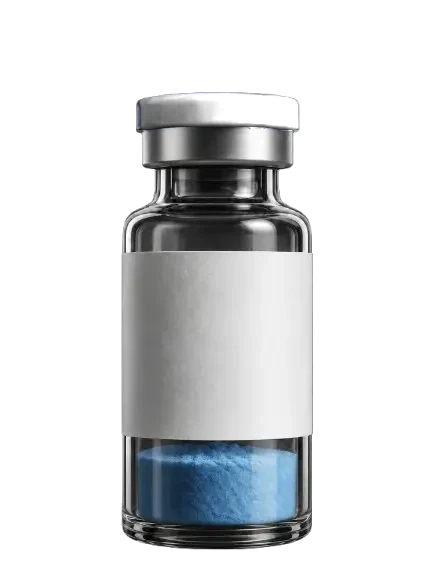
Available sizes: 100mg
AHK-Cu is alanine-histidine-lysine bound to copper(II). GHK-Cu is glycine-histidine-lysine. The histidine, which coordinates the copper ion, and the lysine are shared; only the first residue differs.
Both function as copper delivery vehicles. Copper is a required cofactor for enzymes including lysyl oxidase and superoxide dismutase, and is damaging when unchaperoned, so a peptide carrier is a plausible route into any copper-dependent biology.
AHK-Cu's distinct research identity is in hair biology rather than dermal matrix:
Dermal papilla cell proliferation in culture, the most reported endpoint
Follicle growth phase transitions — anagen, catagen, telogen
VEGF expression in follicular tissue, linking to perifollicular vasculature
Copper-dependent enzyme activity, shared with the GHK-Cu literature
GHK-Cu is the near-identical comparator with a far larger literature, and the two are frequently studied side by side precisely because one residue separates them.
Certificates of Analysis are published for tested products and batches. A certificate is a batch-specific record: it reports what was measured, by which method, on a stated date, against a batch identifier. It is evidence about the sample analysed at the time of analysis, and it is silent on attributes it does not list and on what has happened to the material since.
The batch number is the field that connects the document to a physical vial. Where the identifier on a vial does not appear on a certificate, the certificate does not describe that vial, however thorough the analysis behind it was. Batch records can be searched directly, and the guides below explain what each field establishes and what it does not.
Supplied for laboratory research use only. Not for human or veterinary use.